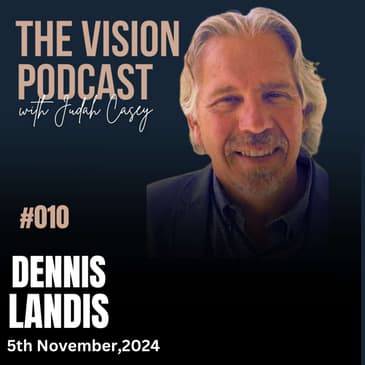
Today's guest Dennis Landis, former CEO and Chairman of PrairieCoast Equipment, brings a wealth of experience and wisdom to this episode of The Vision Pod. With over 30 years at the helm of one of Canada's Best Managed Companies™, Dennis offers invaluable insights into successful business management, book writing, and leadership.
[00:00:07] Welcome back to another episode of The Vision Pod, where guests are hand-picked to bring value to your everyday life. Enjoy.
[00:00:15] On today's episode, we have Dennis Landis on the show. He's a successful business owner who owns Prairie Coast Equipment.
[00:00:38] What are you writing your book about?
[00:00:41] The title of the book is Finishing Well.
[00:00:43] Okay.
[00:00:44] And I think it's mostly about watching a lot of very, very successful leaders.
[00:00:51] You know, they can be business people or they could be interested in other celebrity sports.
[00:00:56] Like, definitely leaders in their field who made some pretty serious mistakes.
[00:01:03] Like, it's just bad decisions and ruined their careers.
[00:01:08] And, I mean, there's no such thing as ending the career, but they definitely left a really dark spot on it.
[00:01:15] And I was finding myself about probably five or eight years ago at the, I would say, at the peak of my career.
[00:01:28] And going, you know, I better pay attention.
[00:01:31] That could be me making that really horrible mistake.
[00:01:33] You know what I mean?
[00:01:34] And I mean, as a teenager, you might make a mistake, but you don't affect very many people.
[00:01:38] But when you're in leadership, I started realizing that there's hundreds of people that I've never even met.
[00:01:45] And they would be affected by my poor choice.
[00:01:49] Yeah.
[00:01:49] So I started becoming really intentional about the choices I made.
[00:01:56] And one day it dawned on me I wanted to write a book.
[00:01:58] And I go, I know exactly the subject.
[00:02:00] And that's what I did it on.
[00:02:02] Cool.
[00:02:02] So that's what that was.
[00:02:04] Yeah.
[00:02:04] So you've read lots of books.
[00:02:06] Have you read any books like the book you're writing?
[00:02:08] No.
[00:02:09] That was probably what piqued my interest in doing that book is because I don't think I've ever read specifically on that subject.
[00:02:23] So rather than, let's say, speaking about my own experiences, I interviewed 16 different leaders.
[00:02:33] Okay.
[00:02:34] Some of them, one's a multi-billionaire, probably one of the richest guys in Canada.
[00:02:38] And he gave me an interview.
[00:02:40] Crazy.
[00:02:40] Crazy.
[00:02:41] And interviewed the CEO of John Deere, which has 150,000 employees.
[00:02:47] Yeah.
[00:02:47] He gave me an interview.
[00:02:49] Cool.
[00:02:49] And a whole bunch of other really neat people.
[00:02:52] And some people, just ordinary people like my dad.
[00:02:55] Yeah.
[00:02:56] And anyway, so it's all of them.
[00:02:59] I have, I think, three sports celebrities.
[00:03:03] One hockey guy, two baseball guys that, you know, play professional.
[00:03:07] Yeah.
[00:03:08] And their experiences.
[00:03:10] I think it's a little harder when you're young and making all those millions.
[00:03:14] You know, you're not ready to make all those.
[00:03:17] Yeah.
[00:03:18] You know, the money and the, I'd say the fame that comes with success.
[00:03:25] As you're that young, you're not ready for it.
[00:03:27] And even somebody in their 50s sometimes isn't, you know, one's not ready for that.
[00:03:33] And it's understanding that as leaders, we might get there.
[00:03:37] And how are we going to handle it?
[00:03:38] Yeah.
[00:03:39] So that's kind of what it's about.
[00:03:41] That's cool.
[00:03:41] How'd you get all these people to interview with you?
[00:03:44] They were people that I had met.
[00:03:47] Okay.
[00:03:47] Yeah.
[00:03:47] Like every one of those people I had met in person first.
[00:03:51] Yeah.
[00:03:53] And there was something about when I would meet them.
[00:03:55] I'd go, you know, there is, I learned a lesson by just meeting them.
[00:04:00] Right.
[00:04:01] And that's what inspired me to pick a chapter and every subject is based around a character that I interviewed.
[00:04:09] Cool.
[00:04:10] So when's that book going to be released?
[00:04:13] I hope in six months.
[00:04:15] Okay.
[00:04:15] It's been a three-year project.
[00:04:17] Yeah.
[00:04:17] And I thought I could probably do it in a year.
[00:04:20] And I worked hard and tried to do it in a year.
[00:04:22] But I'm still working on it.
[00:04:24] And one nice thing that did happen is, well, two things.
[00:04:29] About two months ago, I added one more chapter and it would have been a chapter I would have totally missed out on.
[00:04:38] Yeah.
[00:04:38] And I'm glad I never had my book finished.
[00:04:40] Otherwise, I'd be doing a second release.
[00:04:43] But no.
[00:04:43] Yeah.
[00:04:43] Cool.
[00:04:44] It was a total miss of a chapter and I'm glad I added it.
[00:04:47] And the other one was is, as I've been writing my book, I also understand that even if nobody ever reads the book, the book taught me more lessons about what I needed to learn.
[00:05:01] Yeah.
[00:05:01] And it was probably just a project just for my own self-build.
[00:05:06] That's awesome.
[00:05:07] And so almost every week, you know, as you're doing a project, I'm sure you with your podcast, you have the same thing.
[00:05:15] Like you keep, like an idea all of a sudden comes to your head and you go, oh yeah, I want to do that, right?
[00:05:22] Right.
[00:05:22] Yeah.
[00:05:22] And with my book, it was a similar thing.
[00:05:25] I had things that I would bump into and I go, I think that really fit in that book.
[00:05:29] Mm-hmm.
[00:05:30] So as I would kind of process that thought, I probably learned one more lesson for myself.
[00:05:36] Yeah.
[00:05:36] So anyways, that was, I'm glad the book took three years because I processed it longer.
[00:05:42] That's awesome.
[00:05:43] Could you see yourself writing another book once this one is released?
[00:05:47] I, this was so out of my comfort zone.
[00:05:50] Oh really?
[00:05:50] Oh yeah.
[00:05:50] It was like, you know, if somebody, it's like, there's a lot of things that I don't do well and I would have thought writing a book was never going to be something.
[00:05:59] That I would do.
[00:06:01] Mm-hmm.
[00:06:01] And, but I, I am a real goal setter and I, when I, when I mentor my young guys, young business people, setting goals and big goals is always what I push them to do.
[00:06:13] So that was, I also set a goal for myself every year as I'm doing it with them.
[00:06:19] Okay.
[00:06:19] Yeah.
[00:06:20] And I just said, I'm going to write a book as one of my goals and kind of regretted making that goal.
[00:06:27] But yeah, it's, it's awesome.
[00:06:29] Yeah.
[00:06:29] So yeah, how do you teach people to set big goals?
[00:06:33] How do you teach your...
[00:06:35] There's a, now that's a subject that there's a lot of material on.
[00:06:39] Okay.
[00:06:39] But goal setting is, is, is, is, you know, a well discussed subject and there's a lot of information one can get.
[00:06:48] Um, I'll give you one lesson and that is, um, I used to see myself as a great multitasker.
[00:06:57] Like I could, in my office, I could be on the phone, somebody across my desk and still making two more other decisions all at the same time.
[00:07:06] Mm-hmm.
[00:07:07] Later to find out that multitasking.
[00:07:09] Later to find out that actually multitasking isn't possible.
[00:07:11] And all you did is, had an interruption.
[00:07:14] Okay.
[00:07:14] To what you should have been doing.
[00:07:16] And you handled an interruption in the middle of what you should have been doing and you did everything poorly.
[00:07:20] Yeah.
[00:07:20] So, that's, but what I learned was, I always had usually 10 goals.
[00:07:28] Okay.
[00:07:29] And as you learn lessons on goal setting, the odds of you achieving any one goal of those 10 when you have 10 goals is almost zero.
[00:07:40] Wow.
[00:07:41] And the fewer goals you set, the higher the chances are you're going to reach a goal.
[00:07:44] So, if you want to set a, um, a, let's say, sizable goal or something worth setting, set one.
[00:07:55] Hmm.
[00:07:55] Two at the most.
[00:07:56] Hmm.
[00:07:57] And your odds of achieving that goal.
[00:07:59] And so, that's probably, we're writing that book.
[00:08:02] I only set that one goal and it's taken three years and I haven't set any other goals in the meantime.
[00:08:07] Oh, wow.
[00:08:07] Yeah, and that's not like me, but, uh, I, I, I've learned to, uh, I mean, there's always,
[00:08:14] these priorities that one has to do.
[00:08:17] Like, I mean, they're, they're, and by goals, I'm not like, in business we have budgets.
[00:08:22] That's not setting a goal.
[00:08:23] That's setting a budget.
[00:08:24] Okay.
[00:08:25] Yeah.
[00:08:25] And in life there's things that we have to plan to do.
[00:08:29] That's not a goal.
[00:08:30] Okay.
[00:08:31] And to me, I, I set goals that on their own they wouldn't be accomplished.
[00:08:35] You have to be intentional and you have to work on them.
[00:08:38] Okay.
[00:08:39] And so.
[00:08:40] Intentionally.
[00:08:41] Yeah.
[00:08:41] Like, they don't, they don't happen by accident.
[00:08:43] For sure.
[00:08:43] Yeah.
[00:08:44] And so you think that setting that goal, like, pushes you to stay focused and stay motivated
[00:08:50] on one thing instead of keep switching from different things?
[00:08:53] And life slips by and it happens, you know, a couple hours slip by and then a week slips
[00:09:00] by and before you know it, five years went by and, uh, you know, you paid the bills and
[00:09:07] you did some things that were, let's say of value.
[00:09:12] But goal setting, I think is being intentional about making a bigger difference than just
[00:09:18] getting by.
[00:09:25] Hmm.
[00:09:25] Do things.
[00:09:27] And I thought, you know, I made a lot of mistakes.
[00:09:40] and you know yes life would have been maybe easier had I not made those mistakes reliving my life
[00:09:47] I go but you know at the same time I gotta go had I not made those mistakes I wouldn't be the person
[00:09:56] that I am today like I have learned to learn from my mistakes I think it's developed me to be the
[00:10:04] person that I am because I did make some mistakes hardships come when we make mistakes those
[00:10:09] hardships mold you into a different person than you'd be if life was easy and you made no mistakes
[00:10:15] so I really felt that making those mistakes early in life also are a little less painful than making
[00:10:28] them when you have a bigger business or when bigger consequences happen to our mistakes and I think
[00:10:35] that I think we all need to sometimes make those mistakes and I'm not regretting some of the mistakes
[00:10:41] you know there's always regrets about things you know it was you know a loss of a friendship or
[00:10:47] something happens when we make poor decisions but at the same time I'm grateful for it yeah
[00:10:54] lessons I learned through cool yeah it's like there's no such thing as a one-sided coin you're always going
[00:11:00] to have two sides to it yeah to the the facts that you get and it's just what you what you do with them
[00:11:08] yeah yeah so what would you say to uh to a young entrepreneur trying to start out I know this might be a
[00:11:18] little bit out of order but no no I I think um well for starters not everybody is built
[00:11:29] to handle business like business has a ton of risks and there are some personalities that
[00:11:39] um when it comes to risk uh it becomes a very stressful event and I think that if if that level of stress
[00:11:50] um is more than it should be I don't think one should try to be an entrepreneur if in your
[00:11:57] personality you can't handle that stress and I think that um you know my measurement was
[00:12:03] there were a lot of things that I did not for the money but I just wanted that um
[00:12:13] it's hate to use the word but there is somewhat of a high in stepping out taking a risk yeah and
[00:12:23] achieving what you set out to do regardless of the monetary outcome and usually in business there's
[00:12:28] always a monetary outcome there's a loss or there's a profit and we measure sometimes our success based
[00:12:35] on that monetary outcome but at the same time I would say that as an entrepreneur if you are motivated
[00:12:44] positively it brings satisfaction there's a you know there's a reward in doing it and it wasn't the
[00:12:54] money uh you will handle risk all right but if every time you have a setback or a decision that involves
[00:13:02] risk and it just causes more stress than that I'd say be careful in setting out to be that entrepreneur
[00:13:10] okay so was money ever one of your like big goals or was it kind of not necessarily I think it was a
[00:13:16] by-product it was definitely a by-product yeah and I mean I have learned that um making more money does
[00:13:27] can create a better business um profits are needed for hiring the best staff profits are needing for
[00:13:37] uh a lot of things and um you know I think there's sometimes a fine line between being known as
[00:13:46] somebody who was a very successful from a profit standpoint and I'm gonna go I most of my focus on
[00:13:52] profit was to build a better business and to just make a difference with that with that profit yeah um
[00:13:59] yes I enjoyed um the perks that making more money gives you that making less money yeah but at the same
[00:14:08] time that wasn't my motivational thing and probably the other thing that I um ask a person who wants to go
[00:14:16] into business is how do they handle change um I'll give you an example and that is my wife she does not
[00:14:24] like change um even buying a new car it has to be the exact same color the exact same model
[00:14:32] because she needs a new car but at the same time hates change and um there you know whereas I
[00:14:40] I thrived on change and uh you have to you have to be okay with change when you're a business for sure
[00:14:51] um and and back to the risk um there isn't a day in business where you could be out of business and broke
[00:15:04] and the bank call in your loans no matter how successful you are though that that day can happen so quickly
[00:15:12] at any stage and um I watched a dear friend and a relative of mine go broke and he had 2 000 employees
[00:15:26] he had businesses all over the U.S. and Canada had a private plane to get to all those businesses to
[00:15:34] get to their end through economic situations that were out of his control he went broke wow
[00:15:41] and you go that you know are are you okay by being under that threat you know is your wife and family okay
[00:15:54] and I've had to watch um my wife um sign over the house because we ran out of money in our business
[00:16:03] and that was the only way that we could make payroll in two two in two weeks
[00:16:08] is we signed over the house and borrowed the money against the house to make payroll
[00:16:13] and not everybody is cut out for those kind of risks and that is just all part of being a business
[00:16:22] and it really never changes it never gets easier um you know we can build some comfort in
[00:16:29] you know you can have a a backup plan to a backup plan but even those backup plans um
[00:16:36] you know is economical things like like COVID was a great example there were some really really well
[00:16:42] run businesses that through no fault of theirs went out of business through that time and uh that's
[00:16:49] that's just how it is yeah yeah for sure yeah it uh you got to be definitely definitely open to the
[00:16:59] risk did you find your wife kind of helped you balance out when when she's more opposed to it
[00:17:05] well she was a good um I think I'd have taken more risks had I not had a solid wife who kept me more
[00:17:14] grounded than my head in the clouds and so yeah there was no question that I think we made a good team
[00:17:20] she allowed me to take risks but I think at the same time she um well actually to be honest there
[00:17:27] there was a lot of there was probably a uh uh uh era in my career where there were a lot of things I
[00:17:34] didn't run by my wife and it was like she'll say no you know I better not even tell her and then that
[00:17:41] way she doesn't know what I'm doing or whatever but I I also admire you know over the last probably
[00:17:48] 10 years uh I found that she has become my most solid um let's say person about something off of
[00:17:59] she understands my character she understands a lot of the other businesses that we do and I really
[00:18:05] uh look in I look forward to her wisdom when we make decisions and now I've gone the opposite way
[00:18:12] and I never make a decision without her being fully aware of it cool so yeah we uh I interviewed
[00:18:19] Terry Belisky as well okay yeah and uh yeah it was awesome we were learning about like
[00:18:26] partnerships and how and how that all went yeah and he was telling me about like the importance of
[00:18:32] uh the prayer that you guys had like uh Monday mornings I think it was yeah so that's that's that
[00:18:39] was pretty cool just held together by yeah no and um you know we understand and a lot of the things
[00:18:45] and and just adding to what Terry was saying we we just actually met two days ago okay and um
[00:18:52] we were reminiscing on some of the things that happened that looking back we go wow did we ever dodge a
[00:19:05] bullet and you know one can say we were lucky or isn't that good the way it rolled out and we
[00:19:12] we go no we understand that God has a hand in some things that happen that we don't even know what's
[00:19:19] happening and sometimes we need the perspective of five years or ten years later to say wow am I
[00:19:24] glad that never happened because we made some deals that never went through and those those deals
[00:19:30] could have cost us our business at that time and it's just neat to see the way prayer and some of
[00:19:36] those things that uh God stepped in at the time we don't you know we were disappointed that the deal
[00:19:43] fell through and it's you know the perspective of time that gives us that opportunity context yeah
[00:19:50] yeah that's cool you to see his his hand throughout the whole thing probably another piece of advice
[00:19:56] that I give to young people is understanding all the dynamics that it takes to be a business leader
[00:20:05] and um we and I'll use myself as an example I was maybe good at only I'll say two parts of a
[00:20:16] I'll use a 10 part uh balance to be a good businessman and and I was good in sales okay
[00:20:24] and with that was also marketing so I knew how to market and I knew how to be a salesman
[00:20:33] but boy there were some big fundamentals that I had no idea and I was really poor at and I'm going
[00:20:42] before you start business you you better have an understanding and that is you know accounting
[00:20:48] like the fundamentals of accounting are so key you know the legal work like understanding
[00:20:54] what a shareholder agreement is understanding what a lease or purchase of a building looks like
[00:21:00] those are so like they can really ruin your business if you don't understand some of those things uh
[00:21:08] HR is another huge huge factor I mean we I've experienced you know especially businesses in BC
[00:21:16] HR is so different in BC than in Alberta you know we we've had the experience of unions in our company
[00:21:22] that's a whole other you know we're not prepared to handle all those things you know all of a sudden
[00:21:28] you know union wage negotiations and all those things that's it that's not something that I was
[00:21:34] prepared for and I think a lot of people in business don't realize how many aspects
[00:21:40] one has to have and I'm not saying you have to be an expert at it but you have to have some
[00:21:46] understanding of it because then you're going to have to delegate a lot of those aspects of that
[00:21:51] business to somebody otherwise but what happens is is when especially when we're new in business
[00:21:58] we can't afford to hire the best people and we can't afford to hire everybody do that so we think
[00:22:02] we can do it ourselves and sometimes we do a really really poor job in those areas and I'm going to go
[00:22:08] we have to respect that all of those is it takes all of those and and some people I'll use an
[00:22:16] example would be really good on the accounting side or on the legal side but maybe are missing on the
[00:22:21] marketing or on the sales side of it and they miss out too because you know it's that salesmanship
[00:22:27] that sells our products and right that's what it you know takes all of those okay and and one doesn't
[00:22:34] totally understand that yeah so what do you think uh it was about your sales that made you so
[00:22:39] successful um I think my personality I I enjoy people okay I got to know our customers really
[00:22:54] well like I um you know it wouldn't be unusual for me to invite it be invited to one of their kids
[00:23:00] weddings or be at a funeral or or just be part of their life so there there was an aspect to
[00:23:09] that's just in my personality to get to know people so I think I listen well and I think that
[00:23:14] that's a big part of salesmanship a lot of salesmen don't listen and it's not the product and it's not
[00:23:22] the price you know and those are part of it but I think it's the human aspect that's the more
[00:23:27] important one I think that that's the one that I was gifted or I worked at whatever yeah I care about
[00:23:33] people yeah that's awesome yeah that does make a like more genuine salesman yeah for sure and what
[00:23:40] about for for marketing what was kind of your your strategy there no that one might might be a little
[00:23:47] bit weak I I I I I thought I was an amazing marketer and I think one thing that I probably took on was
[00:23:54] I probably took on too much product and I I I thought that you know I could see I think I'm really good at
[00:24:04] seeing an opportunity and I sometimes push too many opportunities through the style of business that we had
[00:24:17] and I think I think there are well there's a number of products that need to be sold
[00:24:33] and learning when to say no to some of those I think is more important than taking on everything that
[00:24:39] should be done hmm yeah and I I think that changes too like there you know you would have no idea do
[00:24:50] you know what a yellow pages ad is uh I'm thinking phone book you're you're you're very much on that
[00:24:58] line yeah okay there's a time where maybe we spent five thousand a month on a yellow page ad oh wow
[00:25:04] and you know today um you know you'd go what is a yellow page ad and and I think trends are changing
[00:25:13] so much and I think that one has to be on the leading edge of I mean you continue doing what's
[00:25:20] what works yes but you have to be well aware of changing markets and change you know what are what
[00:25:26] are the markets for your customer base and the marketing for that is obviously different than
[00:25:31] somebody else's and just because something's working for somebody doesn't always work for you either
[00:25:37] and so um that's it's that's the thing yeah always adapting yeah it was there lots of change in that
[00:25:45] in the industry that you were in huge change yeah and it's changing even more um as we see
[00:25:53] you know it's but I won't get into the dynamics of the changes in our industry and marketing
[00:26:00] as much as just understanding that uh for whatever product line you're in there there there are the
[00:26:06] need to know is there and to stay ahead not not get blockbustered um I know one of the other things
[00:26:15] that you were talking about is like what advice would I give to to somebody starting out in business yeah
[00:26:21] and and back to like understanding your character and I get it what one of the things is is
[00:26:26] um do you consistently finish what you start or do you have a lot of half-done projects around
[00:26:37] yeah yeah you know and I gotta go those of us that start projects and don't finish them
[00:26:44] we're gonna struggle in business business is sometimes a grind and we have to finish what we start
[00:26:52] and uh understanding that I will come back and finish what I started is a really really important aspect of it
[00:27:02] um probably another one that I um we talked about it like are you in it for the money
[00:27:10] or is there anything else that drives you and probably something that's very fashionable now
[00:27:21] is you know they talk about passion and like you know your your passion for the business and I'm gonna go
[00:27:27] passion is good making money is good but not neither of those two will get you
[00:27:34] yeah like the grind of doing it every day neither of those things will keep you at it
[00:27:41] you will run out of passion and the money won't do it for you anymore
[00:27:47] and understanding whether that's an industry that you could enjoy you like the customers in it
[00:27:54] um there there are some industries that I look at and I go you know what that that customer base is so
[00:28:01] different than the ones that I would want to spend a lot of time with and it's interesting like it is
[00:28:07] um like understanding if you can fit in that environment and enjoy coming to work whether you
[00:28:15] made money or not or whether it excited you or not but I I can come in and do it every day
[00:28:21] and it probably took that I I I bounced around with 15 different businesses while I was in the John
[00:28:29] Deere business and it wasn't till the day that I realized okay out of all the businesses that I'm
[00:28:34] looking after right now it's the John Deere business that I really like the most and I go whether and it
[00:28:40] was probably our least profitable one at the time wow but it was one that I chose and um you know
[00:28:50] understanding that's what I want to do made all the difference and it wasn't about the money and it
[00:28:55] wasn't about I guess it was partly about the passion but it was mostly about I chose yeah do it and that
[00:29:02] that made a big difference did it for 35 years yeah um what's some of the best advice that I had
[00:29:10] received probably the best one that I got was and I was in my 50s when I got this advice so
[00:29:17] unfortunately I got a little bit too late and it was getting a mentor
[00:29:24] and I I picked one and he lived in Vancouver he still lives in Vancouver I don't live down there
[00:29:32] anymore yeah and I met with him once a month for 10 years and it made the biggest difference you
[00:29:38] know it was 90 well I would say 70 percent of what we discussed was about business the other 30 percent
[00:29:47] was about life balance and um just being accountable to that mentor having that's where I learned to set
[00:29:57] goals differently that's where I learned life balance differently and it really really made a big
[00:30:03] difference and it is for that reason I mean you got to see the groups that I've started there yeah
[00:30:09] and I'm gonna go you know what if if I can give a young person starting out in business some advice start
[00:30:16] earlier you know with with the mentorship and and be you know pick somebody that um you look up to and
[00:30:24] somebody that you will be accountable to and it's not that they're gonna tell you 101 things that you
[00:30:31] didn't already know but there there is something about that accountability that that makes it work not not not not
[00:30:39] but you learned and uh um just learning from that person is I think one of the key pieces of advice
[00:30:46] that I would like to give yeah Dennis started up a bunch of mentorship groups any mentors mentors
[00:30:53] businessmen or just people in the community yeah yeah that's awesome so what would you say if someone
[00:31:00] out there is looking to get a mentor what would you say to look for in a mentor hmm um I would
[00:31:12] like there are a lot of people that I've met that are extremely successful but there are some parts of
[00:31:20] their character that I don't admire and I would go I think picking a character like the characters that
[00:31:30] you're looking for are more important than the success of what they've done but I also think that um
[00:31:37] we listen and it's it's just a human we we we tend to listen more carefully to people that are
[00:31:45] successful than one that have failed yeah yet I would say focus on the character of the person
[00:31:52] more than on their success and if you can get both good for you cool yeah yeah that's good advice there
[00:31:59] yeah that's awesome you you like to read quite a bit what uh what are a couple of your favorite
[00:32:04] books that you've been reading um I the last one that I've and I gave out probably 30 copies of it
[00:32:12] it's called the artist the art of significance and uh it's just the importance of being a significant
[00:32:22] person and uh I really appreciated the simple lessons that he put in there and it's it's an easy
[00:32:30] book to read and yet profound and uh it can go you don't have to be in business to be a significant
[00:32:38] person but I think it's sometimes in business we tend to focus more on running the business than
[00:32:47] in being significant as an individual and I think that a business leader that is better
[00:32:55] makes a much better company to work for than just a successful business and uh I I appreciated some
[00:33:03] of the lessons that I learned there the other one that I learned that I've really liked lately is called
[00:33:09] 10x so 10 times and uh the challenge was in this book is uh we often want to increase our
[00:33:21] whether it be productivity or what we do and the focus is uh he pushes the reader to um strive to be
[00:33:31] 10 times better than or do 10 times more yeah and he says it's easier well I'll let you read the book
[00:33:38] to figure out how he says it's easier but a lot of times is um you know we we we we we we focus too
[00:33:45] many too much on the smaller stuff and like leaving the small stuff alone and work on the big
[00:33:49] stuff is easier than just fixing one little thing at a time so anyways it's it's an interesting concept
[00:33:56] and I'm trying to adapt some of it and one way that I'm doing it is I say no to a lot of things
[00:34:03] that maybe I would have said yes to in the past because I'm going to go they're not I should do
[00:34:08] it but at the same time um I go it's not going to get me to where I I I'm very intentional on what
[00:34:16] I'm going to do over the next five years very intentional and if it's not going to help me get
[00:34:20] there I'm going to probably say no I'm not going to do it yeah good at saying no now cool and who's
[00:34:26] that that's that's 10x is easier than 2x right is that the book that's it did your dad yeah yeah
[00:34:33] did you read it yet I read some of it okay and it's a hard read it is yeah but the the last half of
[00:34:39] the book gets better it makes more sense but yeah I I struggled to get through the first half
[00:34:44] maybe starting them yeah it's half and then you read the first time for me it was difficult because I
[00:34:50] I just want a like a like something to apply it to it it would really yeah yeah so when I had when
[00:34:57] I have a business to apply it to then I'll really give her yeah yeah yeah I should have um what other
[00:35:04] questions you got here I should I should have brought that I should have brought the questions up usually
[00:35:10] usually right now I'm trying just to uh do like more conversation style conversational style yeah I
[00:35:16] know I'm I'm good with that too because what was one of the things and uh if you don't mind I'm
[00:35:30] going to read a quote that this guy wrote um his name is Dan Clark he's written 37 books one of the
[00:35:39] guys that I interviewed an amazing individual and he's the one that wrote the book Art of Significance
[00:35:45] and um you know as as I think of business men specifically I'm going we can be extremely successful
[00:36:01] and sometimes with success there are some consequences to our success that can actually
[00:36:10] bring us down and one is you know a failed marriage is an easy one I think um when you're
[00:36:17] when you're making way too much money the the risk of addictions increases I mean you have the option
[00:36:24] to do way more stuff than uh than you should be doing and uh I'm gonna go I'm focusing and I'm trying
[00:36:32] to help help people focus on life balance and I'm gonna go um I I had one of my best friends was
[00:36:44] I'm gonna guess like I I think I met him when I was in my 30s and at the time he was extremely
[00:36:52] disciplined and ran just an incredible business and I always really looked up to him
[00:37:02] and over the last 25 years I've been just average in my business but he went through two marriages and
[00:37:10] is on his third and even though he's still an amazing smart businessman it cost him a lot and it was
[00:37:20] just it wasn't just money and it was just um those aren't easy times to go through and uh his business
[00:37:29] suffered through those failed marriages and um you know all of us know of somebody who's had either a
[00:37:37] drug or an alcohol addiction that just ruins their business and you know we we too many times we focus
[00:37:44] on the style of business we run or the success of what we've set out to do not realizing that it takes
[00:37:51] more than just a smart business person to make a successful business and I think it's our lifestyle
[00:37:59] that probably has as much to do with it as anything and um I'm going to just read you a quote that
[00:38:06] Dan Clark gave me and it was um he's a Harvard business professor named Clayton Christensen and
[00:38:15] he titled this book How Will You Measure Your Life? So in it Christensen a Harvard Business School
[00:38:22] graduate himself shares a comparison and contrast of his five-year class reunion and then his 25-year
[00:38:31] class reunion and as you can imagine every graduate from Harvard is in a high intellectual class occupied
[00:38:38] by a select and gifted few so it's no surprise that his five-year reunion every classmate was polished
[00:38:45] and prosperous they had great jobs and some were working in exotic locations all making big money with
[00:38:51] huge projections to make more all had married spouses much better looking than themselves
[00:38:57] as Christensen's 25 reunion or at Christensen's 25 reunion a few classmates were executives at renowned
[00:39:07] consulting and finance firms like McKinsey and company Goldman Sachs and some were making boatloads of money as entrepreneurs
[00:39:14] however despite their professional accomplishments more than half were divorced some on their third marriage
[00:39:21] and the general consensus was that most of them were clearly unhappy and in fact one classmate
[00:39:29] was the CEO of Enron who was convicted later of felon as a convicted felon doing life in prison
[00:39:36] so what happened so all of Christensen's classmates started out happy and I'm talking this is classmates from
[00:39:43] Harvard right like this is it I'm not gonna criticize the comp high school but anyways
[00:39:50] that to me is you know our grand prairie you know little pool yeah but these guys are Harvard grads okay
[00:39:58] so they all started out happy and they all started on positive trajectory to become successful but the
[00:40:04] collective seemingly insignificant decisions they made along the way ended up costing them a life of significance
[00:40:12] so the cool thing about his life-changing book finish oh no that's now he starts talking about my book
[00:40:18] but anyways it um well maybe I should finish reading again it says the cool thing about the life-changing
[00:40:25] book finishing well is that Dennis invites us to conduct a self-audit and answer what is most important to us
[00:40:32] in our career and then points out the problem is that we think what matters most in our job often does not align
[00:40:40] with what really makes us happy and even worse we didn't notice that gap until it was too late
[00:40:46] hmm so anyways that's that's kind of the advice that I try to give is um uh
[00:40:55] and I know happiness doesn't pay the bills
[00:40:59] but we will pay more bills when we're happy yeah if that made any sense and that's not very profound but
[00:41:06] uh it it does make a difference yeah for sure so how did you um have that work-life balance
[00:41:14] and keep I'm still working on it you know it is the the DNA of an entrepreneur
[00:41:23] um we never shut off and um even when we're sitting on a holiday and even though we're sitting having a
[00:41:33] a coffee with our spouse sometimes our mind is on the next project yeah and you know and it's learning
[00:41:42] how to shut off it's learning um you know what one is is when is enough enough or when is it good
[00:41:50] enough like we're always striving for perfection and you know we do it because we want to give good
[00:41:56] service we want to run good companies you know we might have good goals in mind with that but at the
[00:42:02] same time it's um you know it there's always a conflict in wanting to do more and do it better
[00:42:13] and then trying to have a good relationship with friends and other people and having life balance
[00:42:19] that is something that it's pretty tricky yeah it's tricky and it and it's always there but i'm i'm i
[00:42:28] i i i intentionally know it which at one time i didn't a lot of times we all think well once i get
[00:42:37] to here then i'm going to start taking more time off or i'm going to spend more time with my family or
[00:42:41] we're going to do you know and a lot of times when we do get there our wife and kids may have moved on
[00:42:50] and all of a sudden you go or you might say look i did all this for you and they go really i
[00:42:55] didn't really want more money or i really didn't want that second house or whatever it was that we
[00:43:01] think we want and um that's that's the tricky part yeah it is figuring that out sooner than later
[00:43:09] cool well i appreciate it dennis that's uh that's really good thanks for coming on my show you bet
[00:43:14] i'm glad uh i'm glad you invited me and uh i'm gonna say yeah yeah you um you show
[00:43:23] um i i like this interest in this podcast and i think that uh you're gonna learn a lot from it too
[00:43:29] yeah yeah you're gonna learn a lot of this good yeah thank you judah thank you
[00:43:36] thank you everyone for listening if you guys learned something or found it interesting please
[00:43:41] share the video with someone as it helps me out a lot thanks
[00:43:45] you