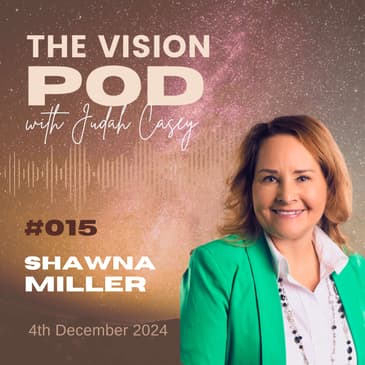
Shawna Miller comes on this episode with an economics degree, an MBA, and years of business experience. She speaks to the difficulties of being an entrepreneur, dealing with recessions, and what she learned from her degrees. Shawna has owned 20+ Subway stores and has been the head of many local boards.
[00:00:07] Welcome back to another episode of The Vision Pod, where guests are hand-picked to bring value to your everyday life. Enjoy.
[00:00:28] Thanks for coming on the podcast today. How did you get into business?
[00:00:34] Well, thank you very much for having me. It's very exciting to be here today.
[00:00:40] Business for me wasn't where I wanted to go.
[00:00:43] So I had attended university and I got an economics degree.
[00:00:50] I had kind of thought that I was going to continue to do something more in that area.
[00:00:55] But we were living in Edmonton while we went to university and my husband and I both had a desire to come back to Grand Prairie.
[00:01:02] So we both took jobs back here and brought us back to the community to where we grew up.
[00:01:09] And then we spent a little bit of time discussing, you know, kind of where we wanted our careers to go.
[00:01:15] And we knew we both wanted to do something where we had some control over our destiny and we could build something that we could be proud of.
[00:01:24] So we decided we wanted to get into a business.
[00:01:28] And it's kind of funny how we got into this.
[00:01:31] My dad had said that he would give us a little bit of money to get started.
[00:01:36] And the Mr. Subs were for sale.
[00:01:38] I don't know.
[00:01:39] You're kind of young, so you might not remember them.
[00:01:41] But there used to be two Mr. Subs in Grand Prairie.
[00:01:44] And they were for sale.
[00:01:45] So we thought, well, you know what, we're going to go take a look at them.
[00:01:48] We didn't know a lot about them.
[00:01:49] We didn't know a lot about food service.
[00:01:51] But we thought, let's take a look.
[00:01:55] So one Saturday, my husband woke up and, you know, as we're getting ready for a meeting with the Mr. Sub people,
[00:02:01] he thought, you know, I should probably spend a little more time trying out the food and stuff like that.
[00:02:05] So we went down.
[00:02:07] He bought a bunch of subs.
[00:02:08] His dad owns a business here in Grand Prairie and works on Saturdays.
[00:02:12] So we went over there and was going to share the sandwiches with his dad and see what his dad thought.
[00:02:17] A little bit of market research, so to speak.
[00:02:21] And his dad said, you know, it's funny that you're here today.
[00:02:25] Because I had a customer this morning that I was talking about you being interested in getting into business and buying the Mr. Subs.
[00:02:31] And he said, oh, I'm the owner of Subway.
[00:02:33] And he said, why don't they buy my business?
[00:02:38] And we're like, we didn't even know they were for sale.
[00:02:40] They weren't for sale.
[00:02:42] Um, but that little fortuitous moment prompted us to make the call to the owner.
[00:02:48] He sold us his stores.
[00:02:49] Um, took about six months to close the deal.
[00:02:53] And, uh, you know, we were with Subway through some of his biggest growth years.
[00:03:00] Whereas now there's no Mr. Subs.
[00:03:02] So what do you think your life would have looked like if you had bought a Mr. Subs?
[00:03:05] Uh, it's hard to say.
[00:03:07] But I'm going to say given the struggles and stuff that Mr. Subs has had on a larger scale,
[00:03:12] probably wouldn't be the same as it is today.
[00:03:15] And in fact, we may not have continued to be in business for ourselves.
[00:03:20] Being in business is extremely hard.
[00:03:22] Um, it's a hard career to choose.
[00:03:25] There is a lot of, um, complex layers, a lot of skills that you need to be able to do it.
[00:03:32] And what makes it, you know, the financial return is, is what drives you to keep doing it.
[00:03:39] Right.
[00:03:39] And so if that financial return isn't there, you might not do it anymore.
[00:03:42] You might make another choice to go back to work, um, for somebody else.
[00:03:47] And that might've been our choice.
[00:03:48] Um, but I'm never one to, to what if, you know, what if it would have happened or anything like that?
[00:03:54] Because you just, you never know.
[00:03:56] Yeah.
[00:03:56] But we are very grateful and blessed that it took us in the direction that it did.
[00:04:01] So you, uh, was it two stores that you bought in Grand Prairie?
[00:04:04] We bought three stores in Grand Prairie.
[00:04:06] Yeah.
[00:04:06] And, uh, we've owned as many as 24.
[00:04:09] Wow.
[00:04:09] Um, right now we own 17.
[00:04:11] Um, we, you know, we've bought some, we've sold some, we built the, built some more and, and, and sold them.
[00:04:18] And, um, you know, we're just mostly in and around the city of Grand Prairie.
[00:04:23] So primarily in Grand Prairie, but around the Peace Region, Fairview, Flair, White Court, those types of places.
[00:04:30] Um, so over the years, the organization has gotten very complex.
[00:04:35] Yeah.
[00:04:36] Yeah.
[00:04:36] You're, you're kind of talking a little bit about the struggle of business owners.
[00:04:39] What, um, are some of the struggles you deal with in Subway?
[00:04:43] Uh, well, I wouldn't say specifically with Subway.
[00:04:46] I think in a more general context, uh, the struggles that every business owner, whether you own a Subway, a McDonald's, a clothing store in downtown Grand Prairie, you know, whatever it is.
[00:04:58] Because there's a lot of things those different businesses share.
[00:05:03] Um, the complexity around navigating the economy, right?
[00:05:08] Right.
[00:05:08] So I think I had mentioned to you earlier that the frequency of disruptive events has actually started to accelerate.
[00:05:17] So when we got into business, the first disruptive events, we got in in 2001.
[00:05:22] The first disruptive event we came across was, uh, 2008, 2009.
[00:05:27] Yeah.
[00:05:27] With the financial crisis in the U.S.
[00:05:29] And Canada had a little bit of a recession, but not too much.
[00:05:33] But we definitely got introduced to, you know, that uncertainty and insecurity about where things are and where they're going to go.
[00:05:40] Um, you know, and we had to navigate certain challenges and stuff.
[00:05:44] And then things were kind of quiet until we got to about 2015 when oil, um, crashed.
[00:05:51] And that had a significant impact on Alberta and businesses in Alberta, particularly ours, because we rely on customers having that disposable income.
[00:05:59] For sure.
[00:06:00] Uh, and then COVID in 2020.
[00:06:04] And then inflation in 2022.
[00:06:08] And then interest rates in 2023.
[00:06:10] So you start to see the trend.
[00:06:12] You go seven years, seven years, and then you're four years, one year, one year, one year.
[00:06:18] And it's almost like one of those challenges isn't complete.
[00:06:24] And another one starts on top of it.
[00:06:27] Because while we're dealing with inflation right now, we were dealing with inflation pretty heavy.
[00:06:32] Um, interest rates came on in on top of that.
[00:06:35] And we weren't quite done dealing with the inflation.
[00:06:37] So having the ability to manage multiple crisis at the same time while you're still recovering from COVID, um, is, is challenging and hard on, on business owners.
[00:06:53] Because you don't have an HR department to rely on.
[00:06:56] Right.
[00:06:56] Or even bosses to talk to when things are really challenging.
[00:07:00] So sometimes it can feel a little isolating.
[00:07:02] For sure.
[00:07:03] Yeah.
[00:07:04] The weight of the world's on you.
[00:07:05] Yep.
[00:07:06] Yep.
[00:07:06] For sure.
[00:07:07] Did you see the price of Subway sandwiches jump up pretty quickly?
[00:07:10] So everyone in the marketplace seen the exact same thing that, uh, you know, prices were escalating as our input costs were increasing.
[00:07:19] And, uh, you know, we definitely felt the challenges that our customers were having as well.
[00:07:26] Uh, and it's a very fine line to walk to, you know, keep your prices at a level that you're, you're still able to cover your own costs.
[00:07:36] For sure.
[00:07:36] Um, and yet you're giving good value to, to your customers.
[00:07:41] So finding that, that.
[00:07:43] And employees too.
[00:07:43] Yeah.
[00:07:44] Wanting to be.
[00:07:44] Yeah.
[00:07:45] And they were having some significant challenges on their own as well.
[00:07:48] Um, so they were, uh, you know, they needed raises and stuff like that to help cope with the challenges that they were dealing with.
[00:07:56] Um, so all around, it was a very complex and it still is a complex, um, environment to try and navigate, you know?
[00:08:06] And I think we're going to see the impacts of that on entrepreneurs, um, over the next number of years.
[00:08:13] Uh, I believe, uh, entrepreneurship has actually been dropping the number of small businesses.
[00:08:19] There's been a decline, um, that may have recovered recently.
[00:08:22] I haven't seen.
[00:08:23] Um, but I do know that, you know, when, when things get really tough, it is hard to be an entrepreneur.
[00:08:30] For sure.
[00:08:30] Do you think there's a recession proof business?
[00:08:34] Oh, my answer is, and someone's going to disagree with me, but I would say there's no such thing as a recession proof business.
[00:08:41] Um, we're, we're in insurance restoration as well.
[00:08:45] Um, and I think there's lots of people would argue that that's recession proof, but I think when recessions hit and people are feeling crunched in their own personal lives and their home budgets and that sort of thing, everybody finds ways to cut.
[00:09:01] And that will impact every business, right?
[00:09:04] For sure.
[00:09:30] For sure.
[00:09:31] Yeah.
[00:09:31] And I think there's a lot of things that affect businesses straight across the board.
[00:09:34] And, you know, when you were asking a question earlier about subway specific or, um, challenges and stuff, and I brought it back to the broader market.
[00:09:44] It's because there's those things that affect all of us.
[00:09:49] So the price of gas, carbon pricing, um, utility costs, um, borrowing costs affect all businesses the same way.
[00:09:59] And then every industry will have those little parts that affect them more.
[00:10:03] For instance, because I'm a food service, uh, restaurant, um, the cost of food will affect my bottom line more than say an accounting firm or a legal law firm or something like that, because they're not dealing with that.
[00:10:18] But they have other challenges that maybe aren't affecting me.
[00:10:22] For sure.
[00:10:23] Yeah.
[00:10:23] Yeah.
[00:10:23] So you're very, you're very busy person.
[00:10:26] Uh, what, what is it you fill your schedule with?
[00:10:28] Well, I, of course, my, my business, my work keeps me quite busy.
[00:10:32] Um, I have, uh, two daughters.
[00:10:35] They're in their twenties and, um, they're, they're very busy girls.
[00:10:39] Um, one is studying a bachelor of science in Edmonton.
[00:10:43] One is studying bachelor of arts here in Grand Prairie.
[00:10:46] And, uh, you know, it's parenting.
[00:10:49] Even when your kids get older, they, they take up a lot of time.
[00:10:52] And my husband and I are very active in the community.
[00:10:55] Um, we like to sponsor things.
[00:10:57] We like to patronize, uh, different events and support, uh, nonprofits, uh, around our community.
[00:11:04] But I also do some volunteer work on my own.
[00:11:07] I've been part of the Alberta Chamber of Commerce, uh, the Grand Prairie Chamber of Commerce.
[00:11:12] Um, I have volunteered on the, uh, Canada Heart Stroke Foundation Board for Alberta.
[00:11:19] Um, and, uh, just really trying to give back.
[00:11:23] We've been very fortunate.
[00:11:25] Uh, business has, has been very good for us.
[00:11:28] Um, and we've been able to, to accomplish a lot.
[00:11:32] And I really attribute that to being in the peace region because the peace region is one
[00:11:38] of those special places in the world where everything supports entrepreneurship.
[00:11:43] And if you have the drive and ambition to put to something together and we work hard at it
[00:11:50] and stuff like that, the, the region just seems to support that and really bolster that.
[00:11:56] I always say to people when they ask, I don't think I could have accomplished
[00:12:01] what I've accomplished anywhere else than here.
[00:12:05] Right.
[00:12:06] And, uh, and I do feel I've accomplished a lot in a very short period of time.
[00:12:11] Um, but we just really want to give back because what we've achieved is not solely due to us.
[00:12:18] It's due to the community and the support.
[00:12:20] So we want to get back to that.
[00:12:22] Right.
[00:12:22] And we fill our time with that lots.
[00:12:24] So yeah, that's cool.
[00:12:25] Yeah.
[00:12:26] So, um, yeah.
[00:12:27] So why, why do you keep yourself so busy?
[00:12:30] Uh, well, I'm not entirely sure.
[00:12:33] And sometimes I ask myself that very question.
[00:12:35] I know my husband asks me often.
[00:12:37] Um, but again, it's, you know, being a person who sees opportunity everywhere and, and has
[00:12:45] drive and ambition and stuff like that.
[00:12:47] There's never anything, there's no shortage of things to do.
[00:12:50] And I'm sure most successful people that you run into are the same.
[00:12:54] They're busy.
[00:12:55] They're helping out.
[00:12:56] And I get asked a lot to help out on different things.
[00:12:58] And I always want to be sure that I'm there to help because, uh, again, I had people that
[00:13:03] supported me along the way.
[00:13:05] Um, and I want to be that for other people.
[00:13:08] I want to make sure that I'm available for that.
[00:13:11] Yeah.
[00:13:11] I think, um, with all the connections you developed, that's probably one of your, your biggest
[00:13:17] assets.
[00:13:18] Cause you probably know everybody in the peace region.
[00:13:20] I know a fair bit, fair bit of people.
[00:13:23] I always, uh, and I have a general interest in getting to know people, right?
[00:13:27] Like I'm always very curious about what people are doing and very similar to why you do this
[00:13:32] podcast.
[00:13:33] You know, you like to ask questions and stuff like that.
[00:13:36] Um, I'm very similar.
[00:13:37] I like to find out about other people, you know, what kinds of cool things they're doing
[00:13:41] in their lives, you know, what kinds of successes they're, they're experiencing and the challenges
[00:13:46] that, that they have.
[00:13:48] Right.
[00:13:48] Um, because I, you know, I've always said we connect through our weaknesses, not our
[00:13:54] strengths.
[00:13:55] And I think when you can be vulnerable and you can have those conversations with people,
[00:14:01] you make some really good connections, some deep connections.
[00:14:04] And over time, you never know when one of those is going to be more important, uh, at
[00:14:09] any given time.
[00:14:10] So, um, would you ever consider, uh, like business consulting or, or is that something that you
[00:14:16] do right now?
[00:14:16] Um, I, I, you know, nothing is ever off the table for me.
[00:14:21] It's not something that I do right now.
[00:14:23] I do, if people ask me questions and stuff, and I'm always willing to mentor something,
[00:14:27] somebody, if they ask for, for help and stuff, because again, I've had people in my life that
[00:14:33] have made the time to do that.
[00:14:34] And I want to make sure I give kind of pass that along, pay it forward.
[00:14:38] And, uh, it's just, um, business consulting is, uh, it would be a natural next step.
[00:14:47] Um, but I really like to be a part of building something up.
[00:14:53] I like being part of the foundation of it and at sticking with it and seeing it through
[00:14:58] where business consulting, you're more moving from one thing to the next, although you're
[00:15:02] helping people.
[00:15:03] And that's very important.
[00:15:05] I just have a different drive.
[00:15:07] I like to be there from, from the ground all the way to the top sort of things.
[00:15:10] You got your MBA and you also got your economic degree.
[00:15:14] Yep.
[00:15:14] So which one did you prefer?
[00:15:15] And you also got your MBA later on in life and you're already successful.
[00:15:19] So which, which one did you prefer getting?
[00:15:21] Well, um, my economics degree I got from the university of Alberta and it's, it's, you know,
[00:15:27] I came out of school and back in the nineties, that's what you did.
[00:15:31] You went to school, you went to university and, and I've always had an interest in the economy
[00:15:36] and math and stuff like that.
[00:15:37] And it was a great experience.
[00:15:39] I started here, um, at GPRC, which is now in WP, uh, and really gave me a great foundation
[00:15:47] for going, going off to university.
[00:15:49] And I recommend that to anyone who asks me always start in a local college or polytechnic
[00:15:55] because sometimes when you get to the big universities, um, you still have something to learn.
[00:16:02] And sometimes getting that foundation can always just make you that much more successful.
[00:16:08] Um, it taught me how to be a good learner, um, and, and gave me some valuable information
[00:16:14] to kind of get going in life.
[00:16:15] Uh, I went back for my MBA because I, I really felt that there was more than I needed.
[00:16:22] Um, again, entrepreneurs, we don't work in, in large organizations or anything like that.
[00:16:29] And we don't take a lot of like, um, training sessions and that sort of thing.
[00:16:33] So we're really kind of on our own to build our own skill level.
[00:16:35] And the masters of business just gave me, you know, really elevated the foundation that I was
[00:16:42] working on.
[00:16:43] A lot of things were very familiar to me when I took it yet.
[00:16:47] I didn't know that's what they were called.
[00:16:49] Now I know what it's called.
[00:16:50] Like, for instance, one example I use is, um, I took one class where we, it was all on
[00:16:56] lean management.
[00:16:57] Um, and, um, you know, it's, it is a very simple, just to boil it down simplistically,
[00:17:04] it's about, um, you know, making sure that your processes are consistent with really supporting
[00:17:11] growth, like efficiency and something simple.
[00:17:16] Like if we use sandwich wrap to wrap a sandwich, where would we keep our spare sandwich wrap in
[00:17:21] the back room or right under the counter where we keep it on the counter and lots of stores,
[00:17:27] they keep it in the back room.
[00:17:29] But when I took lean management, I realized that there were ways that simple ways that we
[00:17:35] could, um, improve our operations to make ourselves more efficient, more productive, that sort of
[00:17:40] thing.
[00:17:41] And intuitively, you know it, but you just don't have the background for it.
[00:17:46] And the background gave me the ability to talk about some of these concepts with a lot
[00:17:51] more confidence, right.
[00:17:53] And, and really dig into them to help propel our business even further.
[00:17:57] Cool.
[00:17:58] So how did you develop your subway management team?
[00:18:02] Uh, it's developed over time.
[00:18:04] So I'm a firm believer is you always build ahead of where you want to be.
[00:18:09] Um, I, we've had, you know, growth come, had come very fast for us, um, over the years.
[00:18:17] And, um, we always made sure that we kind of hired a little bit before of where we wanted
[00:18:22] to be.
[00:18:23] So, you know, we knew we wanted to grow a little more.
[00:18:26] We sensed our business was growing and it was just, um, you know, you need one more person,
[00:18:31] but you don't really need one more person.
[00:18:32] So you would add an additional person and then let the business grow into that.
[00:18:38] It can be very difficult if you let the business drive the car, right?
[00:18:44] It's the owner that has to drive the cars because you know where you're going, you know, where
[00:18:47] you want to go and you make a plan.
[00:18:50] Um, if the business is driving the car, it's just going wherever it wants.
[00:18:53] And you're, you have no plan for how you're going to support it.
[00:18:57] And that can lead to burnout because you're going to be working way harder than you need to.
[00:19:03] Um, and it could tax your resources, whether that's your human resources, your financial
[00:19:09] resources and a well-laid plan thinking a little bit in advance doesn't sometimes doesn't have
[00:19:16] to be years in advance.
[00:19:17] Sometimes you're just thinking six months or a year.
[00:19:20] It helps you lay that, that roadmap out so that you can manage it.
[00:19:26] Right.
[00:19:26] Yeah.
[00:19:26] So how did you, how do you develop your plan for the next six months or a year?
[00:19:30] So we sit down generally and, you know, identify opportunities for growth.
[00:19:35] So it could be purchasing new stores.
[00:19:37] It could be relocating existing stores.
[00:19:40] It could be looking for new store opportunities, or it could be looking for a completely different
[00:19:46] business.
[00:19:46] Right.
[00:19:47] Um, because a business is evolved and I would say, so we always hear the term serial entrepreneur
[00:19:54] and I always think that makes us sound like serial killers, but, um, but, but really that's
[00:20:01] what I am.
[00:20:01] Serial entrepreneur.
[00:20:02] So I not only see opportunity in my existing businesses, but I see opportunity in other
[00:20:08] things.
[00:20:09] So we're always kind of scanning that and, and we've got a wish list, you know, what do we
[00:20:13] want to do?
[00:20:14] What do we think is realistic to happen in the next six months?
[00:20:18] What's a year?
[00:20:19] And what's a wish that's just that it's just a wish, the likelihood of it coming, coming
[00:20:24] to fruition or is very slim.
[00:20:26] Uh, and then we kind of figure out what resources we need to support each of those.
[00:20:32] So a strategic plan, a good strategic plan is worth its weight in gold.
[00:20:37] Um, the process of going through it and thinking about all these different things that impact
[00:20:42] your business and can have positive and negative effects on it.
[00:20:47] Right.
[00:20:47] Um, you know, there's things within our companies that are affecting us.
[00:20:51] There's things on the outside of our companies that are affecting us and understanding those
[00:20:55] forces can help you control them a little bit.
[00:20:58] So again, they're not controlling you.
[00:21:01] They're not driving the bus.
[00:21:02] You're, you're in control.
[00:21:04] You know where you're going, but a strategic plan always has to be flexible, right?
[00:21:08] Because things change.
[00:21:09] Environments change.
[00:21:10] Anyone who had a strategic plan, what the lockdowns were March, 2020.
[00:21:16] Anyone who had a strategic plan in February of 2020, it was completely no good anymore.
[00:21:21] And they had to revisit everything, right?
[00:21:24] So you have to be flexible and a good strategic plan will have that flexibility built into it
[00:21:30] where you have an opportunity to, to kind of move where you need to, to keep things on track.
[00:21:36] Mm-hmm.
[00:21:37] So did you look to buy more subways during the big recessions?
[00:21:42] Um, I don't know if they could necessarily coincided with the big recessions.
[00:21:47] Usually, um, we're looking for larger acquisitions.
[00:21:51] And, um, you know, we're keep really good relationships with, um, our fellow franchisees, with fellow business owners and stuff.
[00:22:01] And you'd be surprised, um, if you leave yourself open, opportunities will come to you.
[00:22:07] You just have to be open to them.
[00:22:09] And you have to talk actively with other people about your openness and willingness to grow, to expand, to investigate new opportunities.
[00:22:18] And I would say anything that we've ever, um, done comes to us very organically.
[00:22:25] It just, we rarely ever force it to.
[00:22:29] It's just someone we know says, hey, I'm doing this.
[00:22:33] You guys should do this too.
[00:22:35] And you're like, hey, that does sound like a good idea.
[00:22:37] And you investigate it, right?
[00:22:39] But it's never anything where we sit down and we say, we want this.
[00:22:43] We're going to do this.
[00:22:45] Yeah.
[00:22:46] Um, we more, it's more generic in saying we want to grow.
[00:22:50] And do we want to grow our store accounts?
[00:22:53] Do we want to grow the diversity in our business portfolio?
[00:22:57] Do we want, um, you know, what do we want?
[00:23:00] But we're open to it and we're investigating and we're asking lots of questions and we're engaging other people.
[00:23:06] And when you engage with other people, the, the, what you learn about what opportunities there are is, is exponential, right?
[00:23:15] It can't, you can't get it any other way.
[00:23:17] Yeah.
[00:23:18] So you and your husband are partners in all your business.
[00:23:22] Is that correct?
[00:23:22] Yeah.
[00:23:23] Do your personality, your personalities complement each other's?
[00:23:26] So we always say we are, we completely make one, one really great person together.
[00:23:35] Okay.
[00:23:35] Because I have different aspects than he does.
[00:23:37] And I tend to handle more of the finance accounting, that type of thing, negotiations, leases.
[00:23:43] And he handles the operations.
[00:23:46] He loves to get his hands dirty.
[00:23:47] He's in our stores.
[00:23:48] He tinkers with stuff.
[00:23:49] He visits with the staff.
[00:23:51] He coaches them, that sort of thing.
[00:23:54] We also have, um, my sister is our partner as well.
[00:23:57] Okay.
[00:23:58] And she's really the same as Jason is.
[00:24:01] She likes to get her hands dirty.
[00:24:02] She's in there chatting with the staff.
[00:24:04] She's really building them up, that sort of thing.
[00:24:07] But being a family business is, it's hard.
[00:24:11] It has, and again, like any other relationship, it has to be managed very carefully, right?
[00:24:16] Because, um, you know, there's just more, more with a family relationship, right?
[00:24:24] And then you throw some business in there.
[00:24:26] And I think everyone has to be on the same page and they all have to be willing to have difficult conversations.
[00:24:34] And I think that's a skill lots of people don't have.
[00:24:38] We're all able to have, you know, great and easy conversations.
[00:24:42] Like you and I here having this conversation, it's a great conversation.
[00:24:45] It's easy.
[00:24:46] Um, you know, we're talking about a lot of the positive stuff, but difficult conversations are, um, challenging for people.
[00:24:55] To approach because, um, you know, we all have that, you know, we want to be firm, but we don't want to be a bully.
[00:25:03] We want to be open, but we want to get what we want.
[00:25:06] And balancing all that stuff out can, can be difficult.
[00:25:10] And I find sometimes the best way to have those difficult conversations is to kind of leave the ego checked at the door.
[00:25:17] Um, and just realize it's not personal.
[00:25:19] It's, we're just having a conversation.
[00:25:22] The topic is not one anybody wants to have, but it kind of moves us forward.
[00:25:26] Yeah.
[00:25:26] And that's, that's what, what me and Jason and subsequent, my sister bring to the table is that willingness to have those difficult conversations.
[00:25:37] And even if there's tense feelings, the agreement is 10 minutes after it's nothing.
[00:25:45] Everybody leaves it behind.
[00:25:46] Right.
[00:25:47] Because we have to be able to continue that good part of our relationship.
[00:25:50] So how often do you guys have difficult conversations in your business?
[00:25:53] I would say it's probably a daily thing.
[00:25:56] Oh, wow.
[00:25:57] Yeah.
[00:25:57] Because again, in business, things are evolving so quickly.
[00:26:01] Um, really difficult conversations, like ones that are very challenging.
[00:26:07] It's probably only a couple of years that really get, get everybody's temperature up.
[00:26:13] Um, but again, we practice our skills on regular everyday difficulties, right?
[00:26:21] So that when we get to those really large challenging ones, everyone's able to navigate them a little better.
[00:26:27] That is not to say we don't have, have, uh, you know, an occasional argument about things where everybody gets a little heated.
[00:26:35] We do that, but it's about how you handle it afterwards.
[00:26:39] Everybody's willing to let it go.
[00:26:41] And we have to, the second you can't let something go, that's when it starts to pile up.
[00:26:45] Right.
[00:26:46] Yeah.
[00:26:46] So if someone's deciding between, uh, a franchise or a startup, a brand new startup, what would you say is things that they need to consider?
[00:26:55] Sure.
[00:26:55] So there's a couple of different things like, so franchises are great because they provide some, some level of safety and security for your financial investment.
[00:27:05] Um, usually it's proven business model and it, um, you know, there's, there's a way of doing things.
[00:27:12] There's other people to talk to, to get advice when things go wrong or to tell you how to make things go right.
[00:27:18] Um, I think I, the failure rate of franchises is, is low.
[00:27:24] Um, it's like 13% or 14%.
[00:27:28] And again, you could find a study that can say a whole stack of different numbers.
[00:27:32] Um, but I think it's very low where the success rate of a startup, I think is like 30 or 40%.
[00:27:40] Like it's very, very low.
[00:27:42] Um, uh, so.
[00:27:45] I think it might be 90%.
[00:27:46] And it could be, it could be, I've seen, I've seen all sorts of numbers with respect to that.
[00:27:53] So always try to keep my estimates fairly general because I'm sure you could find a, a, a article or a report for just about anything.
[00:28:01] Um, but the success rate of a franchise is, is high.
[00:28:05] The success rate of a startup is, is low.
[00:28:08] Um, so it provides you with some safety and security.
[00:28:11] However, in a franchise, you're kind of taking on a boss, right?
[00:28:16] Because the franchise wants some input into what goes on and they have a vested interest in your success.
[00:28:22] So they're going to have opinions about what you're doing, how you're doing it.
[00:28:27] Um, and they're going to want to have that input and that, you know, that's just, that's a natural part of a franchise agreement.
[00:28:34] So there is, it tends to be more rigid.
[00:28:36] You don't have the flexibility, um, to change things up.
[00:28:40] You know, um, we're also part of a group.
[00:28:42] So for instance, say subway launches a sandwich does really good in downtown Toronto.
[00:28:48] Doesn't do good in Northern Alberta.
[00:28:50] I don't have the ability to drop that off my menu.
[00:28:53] Right.
[00:28:53] Because I'm part of a group.
[00:28:54] We, we do things consistently.
[00:28:56] And that's what customers expect from us is that they walk into a subway and it look like a subway and it feel like a subway and the food tastes like subway.
[00:29:04] Um, so there's, it, there's a little bit of structure in that respect.
[00:29:08] Um, and again, it just comes down to how you feel you can approach that business.
[00:29:16] If I thought Shauna and Jason sandwich shops would make more money, that's what we would be doing.
[00:29:22] But that's not the case in this particular market.
[00:29:25] Fast food, um, the chains tend to dominate.
[00:29:29] Um, restaurants, even the chain, chains tend to dominate.
[00:29:33] Um, so it's an industry that's very supportive of franchises.
[00:29:38] However, um, you know, there are other, um, models where independent startups work best.
[00:29:47] Um, you know, like, uh, you know, people who offer tech support or people who, you know, website design or, or lawyers or accountants, their support, their business models support startups.
[00:30:02] Right.
[00:30:02] It's very infrequent that you see franchises in those.
[00:30:07] Right.
[00:30:07] So it all, it all depends on the industry.
[00:30:10] It all depends on your risk tolerance.
[00:30:13] Um, and it all depends on what your goals are.
[00:30:16] Right.
[00:30:17] Yeah.
[00:30:18] Yeah.
[00:30:18] Did you find that when you were doing your MBA, did, um, your classmates have some really good business ideas?
[00:30:25] Um, the MBA tends to attract people who are working in, in an industry.
[00:30:32] They're working for a larger company.
[00:30:34] Um, there were a couple of entrepreneurs in there, but we were by far the, the smaller number.
[00:30:41] Right.
[00:30:42] So most people that were going through the program aren't looking for business startup ideas.
[00:30:48] They are looking at how to flourish in, in a corporate environment.
[00:30:53] Um, so I, I'm going to say no, I didn't hear a lot, but I, that being said, I heard some great ideas about how to run things, how to manage people, how to manage capital, how to negotiate.
[00:31:07] Um, I learned a whole bunch of things that I could take and really apply to what I was doing.
[00:31:14] So what is your number one skill?
[00:31:17] Would you say?
[00:31:19] I would say my number one skill, I want to say it's financial management, but it, it really is, um, people management and relationships.
[00:31:28] Okay.
[00:31:29] Um, very good at, um, you know, just sitting, having a chat with someone, um, putting them at ease, getting some information from them,
[00:31:37] giving them some information and again, having those difficult conversations.
[00:31:41] I, I don't have an issue.
[00:31:43] And sometimes like when you're dealing with employees or whatever, you, you know, you have to be able to tell them something they're not going to want to hear,
[00:31:50] but you have to do it in a way that's respectful, um, that gets the point across, but also encourages them that it gives them hope that they can make a difference.
[00:32:01] They can change or, or we can change, or we can find a way forward that.
[00:32:06] And sometimes it takes a lot to, to get that delicate balance.
[00:32:10] And I just love talking to people.
[00:32:12] Like I, I'm a real people person.
[00:32:14] So a lot of your job you'd say is conversational.
[00:32:17] Yeah, I would say so.
[00:32:19] Um, my job is, um, problem management.
[00:32:24] Um, so I always, you know, I always got to work really hard to stay positive about things because my day will get encompassed with problems.
[00:32:35] People generally aren't coming to the, to the top person in the company with all the successes.
[00:32:42] Um, but when there is problems, that's definitely when they need me and they need my support.
[00:32:48] Uh, so I will, I, I'm a bit of a firefighter sometimes.
[00:32:52] Yeah.
[00:32:52] So when you're solving a problem, are you the type of person who grabs a notepad and starts writing?
[00:32:57] Are you the type of person that has an answer right away or you, or the person that has to think overnight about it?
[00:33:02] Uh, usually I, uh, I like to sit and listen.
[00:33:08] Um, I don't write a lot of notes when I'm chatting with people right off the bat.
[00:33:13] I like to approach the situation more conversationally.
[00:33:16] Let them talk, listen to what they're saying, get an idea, you get a sense of their body language.
[00:33:23] You can focus on the tone of their voice, focus on the things they're not saying, right?
[00:33:28] Because people are saying things, but there's a lot that they're communicating to you that, that are not in their words.
[00:33:33] It gives you an opportunity to do that.
[00:33:35] And once I feel comfortable that I've got a lay of the land, then I pull out a pad of paper and a pen and I ask them to repeat a couple of things that I want to know.
[00:33:43] I write down some information.
[00:33:45] Um, usually I have a sense of the direction I want to go sooner rather than later.
[00:33:52] I'm a firm believer.
[00:33:54] It's better to move quickly and maybe not be as perfect than to move slowly and wait for the perfect response.
[00:34:01] Um, and, but I try to do it collaboratively and I like to ask the question.
[00:34:07] So what do you think?
[00:34:08] What do you think the solution is here?
[00:34:09] Where do you think we should take this?
[00:34:11] If you were me, what would you, how would you handle this?
[00:34:14] Or do you have any advice for me on how I could handle this situation?
[00:34:19] And sometimes people give you that information and then you can incorporate it into whatever decision you're trying to make.
[00:34:26] But, um, it, whether I make a decision right away or I take time to make it will depend on the situation.
[00:34:35] But I would say for the most part, I tend to arrive at decisions fairly quickly after I've listened.
[00:34:42] So you're, you're also big into learning all the time.
[00:34:46] So do you read quite a bit of books?
[00:34:48] I do.
[00:34:48] I listen for the most part.
[00:34:50] I, I don't read books, but I have about a 30 minute drive to work every day and a 30 minute drive home.
[00:34:55] So it gives me some time to listen to the books.
[00:34:58] And I have a, I have a rotation.
[00:35:00] I, it's something that builds my mind and then something that's junky for my mind.
[00:35:04] Right.
[00:35:05] Um, so just try to keep that balance.
[00:35:08] You know, um, I've got some favorite books that I love and I keep coming back to, um,
[00:35:14] um, there's this one book, uh, written by Hans Rosling.
[00:35:19] Um, there's a couple of different authors on it and it's called Factfulness.
[00:35:23] Um, love that book.
[00:35:25] I've listened to that three or four different times.
[00:35:28] Um, one book that I read in the last couple of years that I really liked and I've actually listened to again is, uh,
[00:35:35] Stephen Poloz's A Next Stage of Uncertainty.
[00:35:39] Um, I like learning about things that I know nothing about.
[00:35:43] Um, and, or things that help me make sense of what's happening around me.
[00:35:49] Um, because I think sometimes there's a, um, trend to making a decision or an assumption about something without having a little bit more information.
[00:36:03] You don't have to get into the paralysis of analysis where you get just reams and reams of information,
[00:36:08] but sometimes you need a little bit more than your gut instinct to, to make a decision.
[00:36:13] And, and, you know, these different types of books are, are what I really like.
[00:36:18] Um, but I, I really love learning about everything.
[00:36:23] So I'll listen to a book on gardening, uh, how to, how to technically, yeah, how to build a better garden or something like that.
[00:36:31] I'll listen to a book on the economy and you'd be surprised how little things will transfer over in ways that you never imagined them.
[00:36:41] So like I read, uh, or listened to a gardening book and planning out a garden and matching up vegetables.
[00:36:46] That was a really good book that taught me a lot about how to lay out a good plan.
[00:36:53] Right.
[00:36:54] And how you do things methodically and how you match different things up and how you can, one thing can be good for another thing.
[00:37:02] And, and that sort of thing.
[00:37:04] Like it's, it's, it sounds silly.
[00:37:07] Um, but a book about a random topic can actually have some, have a lesson to teach you about something you really need to know something about.
[00:37:17] Yeah.
[00:37:17] I think my, my, I really like politics.
[00:37:20] I enjoy it a lot, but the reason I enjoy it is just because like of the strategy.
[00:37:25] Strategy and it's just, it's, it's all, uh, a game and they're just working to, I don't know, get what's in favor for them.
[00:37:32] But you can really see, uh, it's, it's like business and it's just strategy.
[00:37:38] A lot of it's strategy.
[00:37:38] Yeah.
[00:37:39] Yeah.
[00:37:39] And, and negotiations.
[00:37:40] So lots of things in life are a negotiation.
[00:37:44] And I am a firm believer that every deal you do or every negotiation you enter into, there is a win-win scenario in there.
[00:37:55] Um, I know the negotiations I don't like are when I'm up against someone who believes one, one of the parties has to lose for the other one to win.
[00:38:05] Um, you know, and I think that there is a, a sweet spot where both parties are not win-win isn't everybody getting what they want.
[00:38:16] Win-win is each party getting what they need.
[00:38:19] Okay.
[00:38:20] Um, from it.
[00:38:21] And, um, I think that's sometimes we go into negotiations.
[00:38:25] Well, I want, yes, I get that you want, but what I want and what I need sometimes are two different things.
[00:38:32] And it's focusing on that need.
[00:38:35] What do I need to get out of this?
[00:38:37] If I get something more, that's great.
[00:38:39] That's gravy, but I have to focus on what I need.
[00:38:42] That and the second important lesson I have around negotiations is never negotiate on something you have to have.
[00:38:50] You have to be able to walk away from it and be okay with that.
[00:38:54] Yeah.
[00:38:54] Yeah.
[00:38:55] You lose all the leverage when you need to deal more than other person.
[00:38:58] Yeah.
[00:38:58] And, and you lose perspective, right?
[00:39:01] The second we, and, and everything I say, every lesson I have is from something we've done where we failed at, or it cost us something.
[00:39:13] Um, it's, you know, I, we bought some, a business, um, oh my God, this had to be about 15 years ago.
[00:39:20] And I got it in my head that I had to have this business.
[00:39:23] I really had to have it.
[00:39:24] And I ended up paying 45,000 more than where I started.
[00:39:27] Yeah.
[00:39:28] I let myself get sucked into a bidding war.
[00:39:30] And afterwards, when I look back on it, I don't actually think I was in the bidding war.
[00:39:33] I think the, the other seller was just driving the price up.
[00:39:37] And if I had stopped for a few minutes and really given it some thought, I might've said, nope, I, I think we're, we're out.
[00:39:46] Um, knowing very well that I could have lost it, but been okay with that.
[00:39:52] So after that, we decided that there was nothing we have to have.
[00:39:56] Yeah.
[00:39:56] Take a more level added approach.
[00:39:58] Yeah.
[00:39:58] Yeah.
[00:39:58] And just see where it goes.
[00:40:00] We have to get what we need out of this deal.
[00:40:02] Um, and then go from there.
[00:40:04] Right.
[00:40:05] Yeah.
[00:40:05] If you were to do a Ted talk, what do you think you would be on?
[00:40:11] Um, I don't know.
[00:40:12] I would have to say my interest is around the loneliness of being an entrepreneur.
[00:40:21] Um, you know, our country is built off the backs of small and medium sized businesses.
[00:40:28] Every one of those businesses started with someone who was willing to take a risk and willing to build something.
[00:40:36] Yet when we get into our businesses, it's very hard for us to talk to other people about what's happening in our businesses or what's happening to us.
[00:40:45] Um, you know, personally as, as the owners of those businesses and stuff I've often said, and I said in the other podcast I was in, you know, entrepreneurs are infamous liars.
[00:40:57] Sometimes we're fibbers because someone will say, how are, how are you doing?
[00:41:01] I'll be like, great.
[00:41:02] I'm great.
[00:41:03] When in actuality, I'm not great.
[00:41:05] So I try and I, it's, it is hard because it's hard to be vulnerable like that.
[00:41:12] I try to be as honest as I, as I can in a situation because there might be someone else there that's, um, can, needs to hear that, that somebody else is having a struggle.
[00:41:25] And I try to know my audience.
[00:41:26] So if I'm with some other entrepreneurs and they're new, they've only been out at a couple of years, three, four years.
[00:41:32] I'm a little more honest where I'm like, yeah, things are hard.
[00:41:36] If managing inflation is difficult, it's cutting into our, our bottom line, that sort of thing.
[00:41:42] Um, you know, I'm not going to get into specific details, but at least they're hearing.
[00:41:48] Yeah.
[00:41:49] Someone else is struggling as well.
[00:41:50] Yeah.
[00:41:51] Yeah.
[00:41:51] So they're not looking for a way out.
[00:41:53] Yeah.
[00:41:54] This person's doing so well.
[00:41:55] Yeah.
[00:41:56] Or they don't feel like there's something wrong with them because they're having the struggle.
[00:41:59] And that's our, that's our natural inclination, right?
[00:42:02] To think, um, I'm struggling.
[00:42:05] So it must just be me.
[00:42:06] When we look around, you know, you have a passion for, for the economy and politics, you know, you look around, you know, the environment we're in.
[00:42:15] Every business owner is feeling a pinch somewhere right now, whether it's in their sales, customers coming in the door, whether it's in the cost of their input, whether it's finding talented staff, um, you know, exporting, importing, whatever.
[00:42:34] Um, because, you know, we have currency exchanges and stuff.
[00:42:38] Everyone's feeling a pinch somewhere.
[00:42:40] And anyone who says, I'm not my, my business is perfect.
[00:42:44] Best it's ever been.
[00:42:46] And I, I don't dispute that might exist, but it's highly unlikely because everyone is feeling something about the environment we live in right now.
[00:42:56] Yeah.
[00:42:57] Yeah.
[00:42:57] I think it's so cool to be an entrepreneur.
[00:42:59] Or like my, like one of my favorite things is I, I, uh, don't play video games that much, but I like video games because you start, you start at the bottom and then you work your way up.
[00:43:09] The video game would be no fun if you were at the top at the beginning.
[00:43:12] Yeah.
[00:43:13] So I think it's such a beauty in starting from nothing and being, being able to build something, build something big, do something good.
[00:43:22] Well, and if you started that, that video game at the top, you probably fail, right?
[00:43:26] Because you haven't built up the necessary skills.
[00:43:32] And every successful entrepreneur will probably say, and they might not articulate it the same way as I do, but they would feel it, that every lesson we have learned is hard one, right?
[00:43:47] Like every mistake we've made, every, um, decision we've made good or bad, every, um, challenge we faced, um, through it has shaped who we are.
[00:44:01] That today we look successful.
[00:44:04] We look like we've got it together.
[00:44:06] We look like we know what we're doing.
[00:44:08] But if you would have known me 15 years ago, I would look like a very different person than, than I look today.
[00:44:14] And so you should never compare yourself to another entrepreneur because, um, it, it all depends on what their experiences were, you know?
[00:44:23] And it, so always encourage people to be kind to yourself because, you know, you are where you are and you, you've got learning to do.
[00:44:32] And especially at your age, you know, you've got, you've got a lot of learning ahead of you, but starting out at a young age, like I didn't start out being an entrepreneur until I was 29 years old.
[00:44:42] Right.
[00:44:42] Um, you know, if I had started 10 years earlier, what would I be today?
[00:44:46] And again, that's always the question I ask myself, but, um, you know, just, uh, would always really, really encourage, um, new entrepreneurs.
[00:44:58] To, um, seek out people who have, who, who are where they want to be.
[00:45:03] Right.
[00:45:04] But also understand that it's okay that you're not there.
[00:45:07] Right.
[00:45:08] And you can get there.
[00:45:09] It's just going to take some time.
[00:45:11] Yeah.
[00:45:12] Just got to delay gratification and, and not need it right away.
[00:45:18] Not like, yeah, not instant gratification.
[00:45:21] Yeah.
[00:45:21] And that's, that's an important point.
[00:45:23] I remember early, early on in our business venture, we had sold our house and we had done
[00:45:29] very well on, on the, the house price had gone up and stuff like that.
[00:45:33] And we looked to buying another one and we had all this money from the sale of our house
[00:45:37] and we just took what we needed to put a down payment on another house.
[00:45:42] And then we took the rest of the money and invested it in our company.
[00:45:45] Um, so that we could buy some more subway stores at the time.
[00:45:49] And for us, that was hard because we, we, the house we had bought, it was a bunch of
[00:45:56] sweat equity in it.
[00:45:58] We, you know, and, and we're talking a couple hundred thousand dollars.
[00:46:01] It's hard to let that go and say, I'm going to put, I'm going to take this money and I'm
[00:46:08] going to put it into something.
[00:46:09] I'm going to give it to somebody else to buy their stores and I'm going to take on a bunch
[00:46:14] of debt to do it.
[00:46:16] And this is going to be better for me than if I just had this $200,000 sitting in my bank
[00:46:21] account, um, making me feel comfortable as it's hard to say that.
[00:46:26] For sure.
[00:46:27] Yeah.
[00:46:27] So are you big on setting goals for the future?
[00:46:31] Like when you say you have like a plan for the next five, 10 years and you're looking
[00:46:36] to, so I, again, not sure if entrepreneurship is where I, where this type of entrepreneurship
[00:46:44] will be where I am in 10 years.
[00:46:46] I don't know.
[00:46:47] Um, it, as, as things evolve over the next little while, it could be, it could be doing
[00:46:52] exactly the same thing then that I'm doing now.
[00:46:54] The goals I set for myself, um, are more, uh, around my time.
[00:47:01] Like how, um, your businesses and depending on how many you have could, can consume you.
[00:47:07] Um, so really being able to look at the future and try to carve out the time to enjoy life,
[00:47:16] right?
[00:47:17] That my goals at this age are more focused on that.
[00:47:21] Yes.
[00:47:21] I want to grow my businesses, but they're going to grow.
[00:47:25] They, they're just naturally going to do that because we're going to keep making acquisitions.
[00:47:29] We're going to keep looking for new opportunities.
[00:47:32] Um, and, and they will grow through the natural plan that we have in our business.
[00:47:37] But for me personally, my goal is to continue to do what I am doing while carving out more
[00:47:45] time for the things I find joy in.
[00:47:48] Like for instance, volunteering.
[00:47:49] I do enjoy volunteering.
[00:47:51] I'm, I'm chair of Northwestern Polytechnic, their board of governors.
[00:47:55] And I love doing that.
[00:47:56] And I love making the time to be able to do that.
[00:47:59] I don't want to continue to do those types of things.
[00:48:02] For sure.
[00:48:03] So what does relaxing look like for you?
[00:48:05] Like what is it, is it lots of vacations or?
[00:48:09] Um, yeah, it's, uh, we, we get away a couple of times a year, but really it's just spending
[00:48:16] time with family and friends.
[00:48:18] Um, you know, we play a lot of card games.
[00:48:21] We're very competitive family.
[00:48:23] Um, so we play a lot of games and stuff, but really just getting together, enjoying people's
[00:48:29] company and, and stuff.
[00:48:31] I could be doing anything while I'm doing that.
[00:48:33] Yeah.
[00:48:34] What is your go-to Subway order?
[00:48:37] My go-to Subway order actually is not on the menu.
[00:48:41] I'm a, I'm a salad gal.
[00:48:43] I, I like a salad with crispy bacon crumbled on the top of it.
[00:48:49] Uh, and, uh, our house, our sub sauce.
[00:48:52] Okay.
[00:48:53] That's what I eat.
[00:48:53] And I always make it myself when I go into the restaurants because I, I eat it so particular.
[00:48:59] Like people always say, oh my God, you must eat Subway every day.
[00:49:02] Sure.
[00:49:02] In the beginning we did.
[00:49:03] Now you, you don't as much as you used to, but we still eat it a fair bit.
[00:49:07] I know our girls managed to find their way into a Subway store about four or five times
[00:49:12] a week.
[00:49:12] Oh, wow.
[00:49:14] Crazy.
[00:49:15] So they eat lots of subs.
[00:49:17] So yeah.
[00:49:18] Okay.
[00:49:18] So what are your, oh, your daughters are just in school now, right?
[00:49:21] Yeah.
[00:49:22] Yeah.
[00:49:22] So my oldest daughter is here in Grand Prairie.
[00:49:25] Um, she's doing a bachelor of arts degree and our youngest daughter is in Edmonton.
[00:49:29] She's doing a bachelor of science degree.
[00:49:31] Cool.
[00:49:32] So they're just kind of starting out on their life and, uh, you know, we try to get together
[00:49:37] with them as much as, as much as we can and stuff.
[00:49:40] Uh, we're kind of empty nesters now.
[00:49:42] So it's just my husband and I and the two dogs at home.
[00:49:44] Uh, so just trying to fill our time with that.
[00:49:49] Okay, cool.
[00:49:50] So you, um, elevate your employees and you kind of like reward them if they're, if they're
[00:49:55] looking for something like that.
[00:49:57] So I heard that you have sold your store to an employee.
[00:50:01] Is that right?
[00:50:01] So we, over the years, we partner, we identify, you know, key employees that are, you know,
[00:50:08] really working hard and they're really doing a lot with their stores and stuff like that.
[00:50:14] And if they have the ambition, we discuss, uh, potential partnership opportunities.
[00:50:20] Uh, we, uh, used to own the stores.
[00:50:24] We were partnered with a former employee and his family, uh, on our Peace River Grimshaw
[00:50:31] and Manning store.
[00:50:32] And, uh, they bought us out.
[00:50:34] I think it has to be about eight years ago now.
[00:50:37] Um, but we were partners with them for seven or eight years.
[00:50:41] Uh, and it was great because, you know, I think they just needed our support to get into it,
[00:50:47] but they, they really ran the store as well and stuff like that.
[00:50:51] And the financial return for us was really good.
[00:50:55] And then in the end, they end up with a business that, that's thriving and that sort of stuff.
[00:51:00] Plus we have a couple of employees that we've, you know, um, done some, uh, partnerships
[00:51:05] with in a very minor role just because their contributions to the company and the overall
[00:51:11] success have been so significant.
[00:51:13] Cool.
[00:51:14] Okay.
[00:51:14] Well, thank you, Shauna, for coming on the podcast.
[00:51:16] This is our longest episode to date.
[00:51:19] So it's really good.
[00:51:20] Well, thank you very much.
[00:51:21] I appreciate it.
[00:51:22] I love being here and I love talking about business.
[00:51:24] Cool.
[00:51:25] Okay.
[00:51:26] Thank you everyone for listening.
[00:51:27] If you guys learned something or found it interesting, please share the video with someone
[00:51:32] as it helps me out a lot.
[00:51:34] Thanks.